
IaaS, PaaS and SaaS
The NIST definition classifies cloud services in three categories:
- IaaS: Infrastructure as a Service
- PaaS: Platform as a Service
- SaaS: Software as a Service
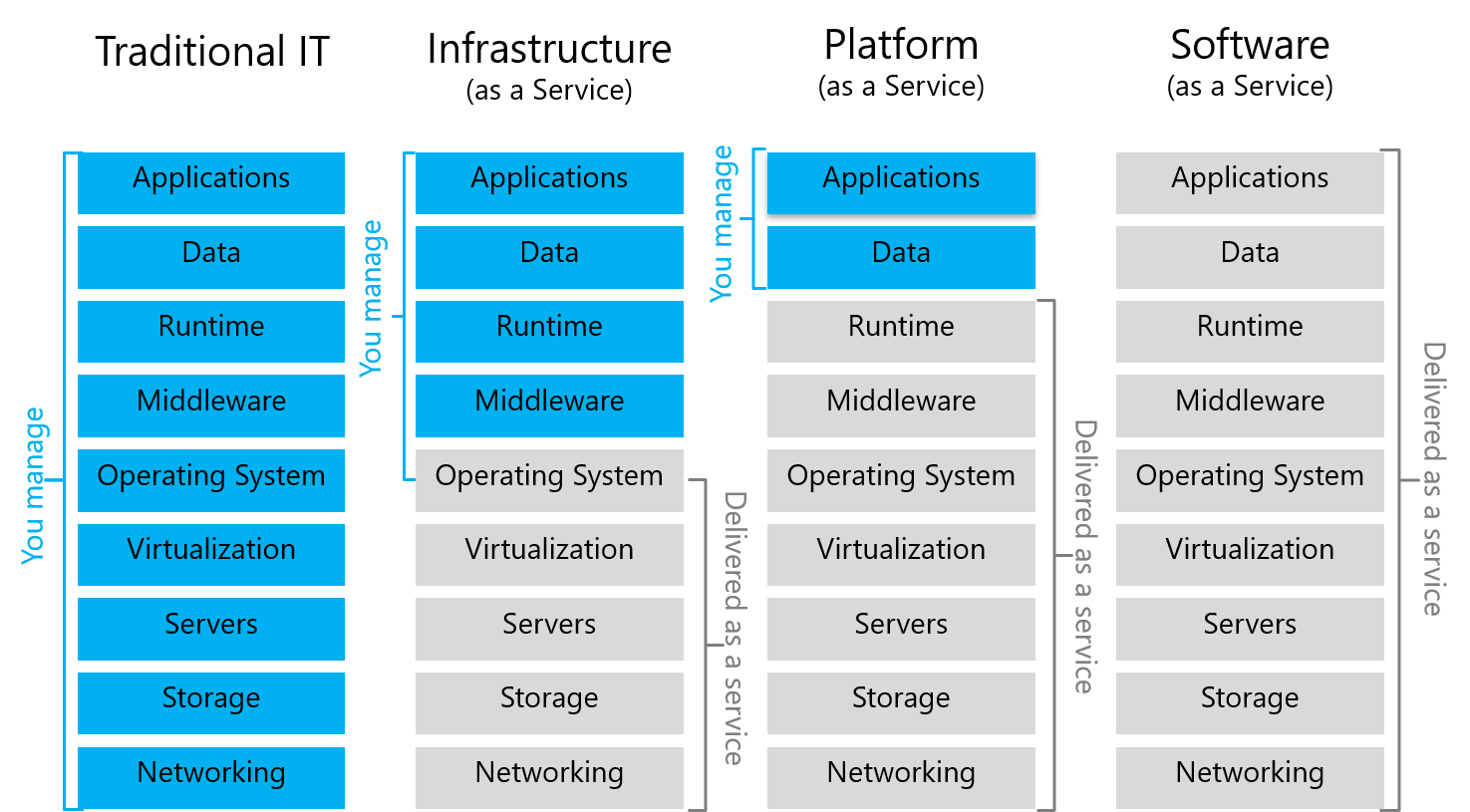
The categories are based on the responsibilities between the consumer of the service and the provider of the service.
IaaS is a service model where the consumer rent virtual servers, storage and networks. The consumer remains responsible for managing the operating system, the applications and the data. The provider is responsible for the hardware, the physical connectivity, housing and physical security, energy and cooling, and the hardware virtualization.
The PaaS services provide a ready-to-use platform for deploying code or containers. The consumer is responsible for developing the applications and managing the data. The provider is responsible for the data(-base) management systems, container engines and operating systems. The provider manages databases and data storage, the operating systems
SaaS delivers complete software applications over the internet, where the provider runs, updates and maintains everything. The consumer must manage authorization and access, and often data back-up.
Starting Points
- Service Models, The NIST Definition of Cloud Computing
- Chapter 4 Cloud Service Models, The Basics of Cloud Computing
- Mastering Cloud Computing
- Cloud Service Models (IaaS, PaaS, SaaS) Diagram
- SAAS configuration management
Key Points
- You can make motivated choices for the different cloud service models
- You can deploy containerized applications to both a IAAS or a PAAS using IaC
- You can manage configuration items within a SAAS stack, such as user accounts, permission sets, data fields, integrations, and customized workflows.